Showing posts with label Catholic Revival. Show all posts

Thursday, April 27, 2023

My Body Grows Person By Person

The following was sent by a friend who is listening to Father Mike Schmitz's postcast, and I thought it is worth sharing. 

-----------------------------------------------------------------------------------

                   My Body Grows Person By Person

My body is built up of living souls, not of churches. Just as I did not come into the world fully grown but chose to develop, cell by cell, in my mother's womb, and gradually from a baby to a man, so it is with my body among you on earth. Unity is not to be achieved by negotiation between leaders of the churches, kings and high priests making treaties on behalf of the people under their authority. Unity will be achieved when two or three humble people meet together in my name, and cry out with my mother,  " My soul glorifies the Lord, who has done great things for me,"

My body grows person by person, just as I grew cell by cell.  All your high level negotiations can do is to remove obstacles to the meetings of the poor and humble; the real growing together in me happens when you listen to me and give words of comfort to those who are weary; when you share your bread with the hungry, bind up the wounds of the sick and give company to the lonely, all in my name. Then the world will be filled with my glory, and I shall be among you again. 

Wednesday, December 21, 2022

The NCW in Saipan

 Below is a video clip from Better Catholics about the Neocatechumenal Way.  Those in the interview are from the Diocese of Chalan Kanoa. As stated by Father Jason, the Catholic Church is rich with many different charisms. The Way is part of that many riches in the Catholic Church.


Wednesday, December 8, 2021

25th Anniversary of the NCW in Guam

 Congratulations to the Neocatechumenal Way in Guam.  We have come a long way!  We are now 25 years old.  The communities celebrated their anniversary together inside the Barrigada Church.  The Church was full with the brothers and sisters. It was great to see them all.  Pat Cottman, who was one of the original itinerant team member in Guam, was also there in our Eucharistic celebration.  Father Pius was there with us in spirit, smiling over us.  The Way have existed in Guam for 25 years despite the persecutions, and we remained strong.  Our continued existence shows that God is good all the time.  Construction of the second story at the Rainan House is also underway.  Adding more rooms will allow the brothers to hold our monthly conviences there.  

Friday, July 30, 2021

Kudos to RMS Bishop Peter Baldacchino

Senator Joe Cervantes of New Mexico publicly announced that he was denied holy communion by his parish priest due to his political views.  According to a news report:

In a tweet on Saturday, July 17, New Mexico state Sen. Joe Cervantes (D) wrote he “was denied communion last night by the Catholic bishop here in Las Cruces and based on my political office.” 

“My new parish priest has indicated he will do the same after the last was run off,” Cervantes added. “Please pray for church authorities as Catholicism transitions under Pope Francis.” The senator represents New Mexico's 31st district, around Las Cruces.

What the Senator said was false.  He was not denied holy communion because he is a Democrat.  He was denied holy communion due to his support for abortion.  Bishop Peter Baldacchino, the new bishop of Las Cruces, New Mexico, and the parish priest of Cervantes' had tried several times to contact the senator, but he never returned their calls.  Bishop Baldacchino's formation was guided by the Neocatechumenal Way, and he was the first graduate of a Redemptoris Mater seminary to serve as a diocesan bishop in a mainland U.S. diocese.  According to that news report: 

In response, Christopher Velasquez, director of communications for the Diocese of Las Cruces, told CNA on Monday that it is “unfortunate that a pastoral issue with a member of the local church be publicized.”  

He explained that both Cervantes’ pastor and local ordinary tried to contact him several times previously regarding his support for an abortion bill, warning him he should not receive Communion. “It did not happen on the spur of the moment,” Velasquez said of the denial of Communion.

“In terms of the diocese, we regret the decision of Senator Cervantes to politicize this issue,” Velasquez said. 

He noted that both Cervantes’ pastor and Bishop Peter Baldacchino reached out to Cervantes privately, in regards to his support for a pro-abortion bill that was signed into law earlier this year. 

“Bishop Baldacchino did not receive a response from the senator,” Velasquez said, adding, “He [Cervantes] was contacted multiple times prior, letting him know that if he voted for Senate Bill 10, he should not present himself for communion.” 

Because it was made public that the senator supported abortion, both the bishop and parish priest tried numerous times to contact the senator privately to inform him not to receive Holy Communion. Of all the seven sacraments, Holy Communion is the most central and important to Catholics.  While it is true that God loves all sinners, it is the REPENTANT sinners whom God, the angels, and all of Heaven will rejoice in.  

Unfortunately, there are bishops and priests who will not deny holy communion to those who support abortion.  Archbishop Wilton Gregory, the Archbishop of Washington DC, for example, has publicly announced that he will not deny President Biden holy communion.  Perhaps, the USSCB should first work in getting all bishops and priests united or on the same page regarding the sanctity of life rather than targeting politicians who support abortion.  When bishops and priests make no distinction between unrepentant sinners and repentant sinners, then in the minds of Catholics and onlookers, there cannot be but little distinction between error and truth, between sin and holiness, and between vice and virtue.  In short, it will create moral confusion.       

Saturday, October 12, 2019

Understanding Vatican II and Ecclesial Movements

Although the article below is a long one, it is well worth the read. The following article can be found here.
----------------------------------------------------------------------------------


Newman key to understanding Vatican II and ecclesial movements, expert says


As the world’s leading expert on Cardinal John Henry Newman’s life and thought, Anglican convert and Oxford theology professor Father Ian Ker offers a unique perspective on the relevance of his ideas in today’s world.

In a special interview ahead of Newman's Oct. 13 canonization by Pope Francis, Angelus News spoke to Ker about Newman’s ideas on salvation, how to effectively reach the hearts of the nonreligious in today’s world, the importance of the Second Vatican Council and the charisms that it gave birth to, and bridging the divide between Catholics of goodwill in today’s Church.

In a time marked by division within the Church and a rejection of her values from outside of it, many Catholics seem overwhelmed and even a bit helpless at times. What can Newman say to those people? Is there still hope? Why?


Fr. Ian Ker: Newman always pointed out that corruption was practically a note of the Church. After all, corruption begins right with the apostles, with Judas Iscariot, and will always be there because of original sin and because of lack of faith.

Newman would certainly be appalled by the recent scandals in the Church, especially by the corruption of the clergy.

On the other hand, Newman always maintained that we should “stand still and see the salvation of God.” Newman would certainly say: “Don’t despair.”

Newman compared the Church to a boat and said that the Church has always been buffeted by the waves and storms.

And there have been times of even greater trial for the Church. Think of what happened to the Church after the Reformation.

The Reformation was a terrible thing for the Church, not only because the Church lost half of Europe, but also for the negative consequences it had on Catholic doctrine, for it meant that we exaggerated all things that Protestants downplayed or denied, and everything that the Protestants emphasized we promptly downplayed. 

So Catholics, for instance, would not read the Bible at all! The Fathers of the Church would be appalled by that.

Part of the despair and confusion has to do with what is perhaps the greatest challenge for Christianity today: secularization. It seems that the sense of the supernatural has disappeared from human consciousness. This reality was anticipated with incredible prophetic insight by Newman.


Yes. He predicted this with unbelievable prescience in a sermon in 1874. He taught seminarians at this seminary in Birmingham that they would face a world that has never been known before, a darkness much greater than even that faced by the early Church, something that would make even the likes of St. Athanasius or St. Pope Gregory I tremble.

For while the Church in her history had been accustomed to deal with pagans, the Church had never had experience of dealing with a simply irreligious world, a world in which, to put it in Newman’s words, Catholics are likely to be “regarded as … the enemies … of civil liberty and of national progress.”

With this is mind, in 1975 Pope Paul VI called the Church not so much to the evangelization of pagans or non-Christians, but to the re-evangelization of the secularized post-Christians or post-religious, what Pope John Paul II called the “new evangelization.” Can the theology and spirituality of Newman help the Church in this task?


As I said in my last book, “Newman on Vatican II,” it is very interesting that the heroine of his novel “Callista” is indeed a post-pagan.

The novel is set in the third century and Callista is a young Greek woman who has lost faith in the gods of pagan religion. She is thus very much like a Victorian post-Christian; she talks very much like Matthew Arnold does when he writes about the ‘long, withdrawing roar’ of the “Sea of Faith.”

This novel, in the character of Callista, exemplifies Newman’s view of how to approach the secularized. Callista is not converted through conscience, the philosophical argument that Newman is famous for, but she is converted by the fact that she feels this desire for happiness, this need for fulfillment.


Callista has had a first experience of Christianity through a slave of hers, Chione, who has impressed her as possessing something she does not possess. And the priest, Father Caecilius, in reality St. Cyprian the bishop of Carthage, has this conversation with her, in which he illustrates what Newman thought would be the best apologetic for the “new evangelization,” namely, a response to man’s sense of unfulfillment and desire for happiness. 

He tells her that every man is in the same state in which she is, that we all love things that do not last, while having no love for him who alone lasts.

As Newman would put it, “He alone is sufficient for the heart who made it,” a sentence that reminds us of St. Augustine’s famous words, “Our hearts are restless till they rest in you.” And that is what put Callista into the Church; it is not conscience at all. She exemplifies exactly what Augustine says. It is no good saying, “Repent of your sins!” that cuts no ice at all. The emphasis should be on people’s happiness, on the ability that Christ has of fulfilling the desires of the human heart.

Newman seems to suggest in the novel that Callista’s lack of happiness is particularly connected with her being “shut up within herself.” In her inability to escape the prison of the self, doesn’t Callista resemble the men and women of our time?


She certainly does. And this is how Caecilius describes hell to her. Callista tells him she is rather attracted by Christianity because she had this Christian slave and now she has this Christian boyfriend.

When she adds that she has trouble believing in hell, Caecilius replies by asking her whether she is unhappy. When she replies she is, Caecilius tells her that hell would just be a continuation of her present unhappiness, the self-imprisonment that she is trying to escape from.

Human beings can’t begin to be happy if they have no relationships with other people, but if you live without a relationship with God you are missing out on the essential relationship of life. The other relationships only make you human, but this relationship enables you to transcend yourself. To put it again in the words of one of Newman’s sermons, without God “We are pent up within ourselves, and are therefore miserable.” Only God can free us from the prison of the self.

So the first step in approaching today’s secularized post-religious people would be to show them that there is an answer to their unfulfilled hearts. But what comes next?


In the novel, conscience does eventually kick in, but then, of course, she also reads the Gospels, where she encounters the figure of Christ becoming man. That is what impresses her. The Gospel appeals to her imagination; Newman uses that word.

After hearing about Christ she needs to learn how to love him, she needs to encounter him. And she does in two ways. First by reading the Gospels, and second through the Church, that is, through the Christians she personally meets. 

Newman took all kinds of apologetics, the intellectual apologetic of the “Grammar of Assent,” but he also had an imaginative apologetic, one based not in theories but in providing real, concrete images of one’s ideas. The first thing he wrote as an Anglican was “The Church of the Fathers,” and that was to impress the Anglicans and show them how different the early Church was from the Church of England, and he wanted women in particular to write stories for children; again you see an imaginative apologetic.

Newman seems to suggest that art and literature may, in fact, be more effective than preaching and theology in transmitting important truths.


That is exactly right. If you want to teach your students about religion, it is much better to teach them about literature that involves religion than teaching them theology. And Newman used his novels and poetry as a vehicle for his theological ideas.

You see, Newman never wrote a summa. If you want to know about Newman’s theology of purgatory you have to go through his “Dream of Gerontius,” and if you want to find out how Newman thought we should approach the secularized world, you should go through his novel “Callista.” Newman says in a letter that he is sorry Catholics have not taken the novel more seriously. “Callista” is far more important than Newman’s other novel, the semi-autobiographical “Loss and Gain.” By the way, “Callista” is also a good read; it is quite good for a romantic story.

In what ways did Newman think that the Church can make herself ready for the task of the new evangelization?


Newman was the founder and leader of the Oxford Movement, and in many ways the Oxford Movement is a forerunner of the new ecclesial movements like the Neocatechumenal Way, because it consisted of both laypeople and clergy.

The ecclesial movements and communities offer people a model of how it is possible to live one’s life in real communion with one another and be happy, and this is exactly how Christianity spread. 

Of course, there was the good news that Christ rose from the dead, but it was certainly the sight of these Christian communities in the early Church that impressed people so much. And that is what we have to do again; we have to impress the world by showing them people who are truly happy and love one another, people who are happier than the others.

But this has to be put before their mind and imaginations in concrete ways; it will be no good telling them. There is a great degree of loneliness in the world and a great lack of communion, so it is no surprise that a reality like the Neocatechumenal Way appeals to people because it offers them a formation in the Faith, but also because it provides community.

I think that that is the way for the Church to move forward: the ecclesial movements, these charisms [movements and individuals in the Church inspired by the Holy Spirit] which, as Vatican II says, were given not for the good of the people who are part of them, but for the good of the Church.

In this sense people like Kiko Argüello [co-initiator of the Neocatechumenal Way] respond to the crisis of the society we are in, in the same way that the Jesuits responded to the needs of the Church in the aftermath of the Council of Trent. 
What the Church needed at the time were priests who were solidly formed; they needed missionaries and they needed teachers. But we do not need those things in quite the same way now. There are other needs, and I think the ecclesial movements and communities are precisely an answer to these needs.

You said that an important trait of the ecclesial movements is that they are formed of laypeople as well as clergy.


Yes, that is what is novel. The Church has been for a long time, and still is, very clerical. Even liberal bishops and clergy are very clerical, in that they still like to define the Church as clergy and laity, but this is not what the Church is.

The Church is the baptized. This is what the Second Vatican Council makes very clear in the second chapter of “Lumen Gentium” (“Light of the Nations”). And this vision of the Church, the one outlined in the first two chapters of “Lumen Gentium,” is the one that Newman anticipated most clearly. Those two chapters are, in my view, the most direct response to Pope John XXIII’s reason for calling the council.

The first reason was the need for Christian unity. The first chapter was obviously of appeal to the Orthodox — since the council defines the Church in terms that are much closer to the Orthodox definition of the Church than to the Tridentine model of a hierarchical, militant Church — and the second chapter is an answer to Protestants, showing that the Catholic Church believes in the priesthood of the baptized and not just the ministerial priesthood.

Those two chapters are a blueprint for the renewal of the Church, because the new movements and communities exemplify what those two chapters say.

Some priests and bishops believe that what parishes and dioceses already do is sufficient for the faithful and that any new “movements of the Spirit” are at best unnecessary and at worst divisive. What would Newman’s reaction to this approach be?


It is interesting that in the “Church of the Fathers,” Newman, as an Anglican, understood that the Catholic Church had the ability to support and regulate charisms.
As Vatican II says, the hierarchical dimension has to regulate the charismatic dimension of the Church. Newman recognized that the Catholic Church had that ability, and that the Anglican church did not. Newman speaks about people in the Anglican church whose attitude toward the charisms was that of saying, “Why is this necessary? What is wrong with what we already have?”

And that is exactly the attitude you were describing, still the attitude of many conservative bishops and pastors in the Catholic Church. And that is not just a problem of conservatives. Liberal bishops and clergy do not like the movements either, for they like to control everything, and they can’t control movements.

And this once again finds a counterpart in the documents of the council. One of the big debates of the council was whether or not the charisms should receive a special mention in “Lumen Gentium.”

Well, they are mentioned three times, so the more liberal side, so to say, won the day against the more conservative party. The question was: Does really everything that counts for the Church take place in the churches — in other words, through the sacraments, the clergy, and the ministers? The answer is no. The council said that important charisms are given to individuals. We can hardly imagine a Church without St. Benedict, and he is a much more important figure than bishops and popes even.

Would you go as far as to say that the new movements are as important for the renewal of the Church as St. Benedict and the birth of the monastic movement?


I certainly would, and as I said, the charisms are given by the Holy Spirit and not by the bishops.

The future Pope Benedict XVI, Cardinal Joseph Ratzinger, said that there were several charismatic surges in the Church: first monasticism, and then the friars, and then the rise of the active orders like the Jesuits, who were no longer confined to the cloister and the office, and then he mentions the missionaries of the 19th century, particularly women congregations, and finally he refers to the new movements as being the fifth charismatic surge.

There is no doubt that in the Church today the Neocatechumenal Way is the biggest thing going, and it is one of the most effective realities, too. It is effective because we need the evangelization, and that is what they are good at. 

Of course, there will always be resistance, precisely as there was resistance to the Jesuits after the Council of Trent. [G.K.] Chesterton, too, writes something similar in one of his books. He notes that new spiritual movements have always been opposed by the local church. That was quite prophetic, don’t you think?

How can Newman help the Church navigate today’s divide between conservatives and progressives?


Newman was a great advocate of the idea of reform in continuity, exactly what Benedict maintained in his famous address to the Roman Curia in 2005.
I do not know whether Benedict had Newman in mind when he wrote those words, but they are remarkably like what Newman says in the “Essay on the Development of Christian Doctrine.”

In that sermon, Benedict distinguishes between two rival interpretations of the Second Vatican Council, a hermeneutic of discontinuity and rupture, and a hermeneutic of reform and renewal in continuity, according to which the Church “increases in time and develops, yet always remains the same.” This is remarkably similar to what Newman argued in his “Essay on the Development of Christian Doctrine,” where he states that Christianity “changes … in order to remain the same.”

Particularly helpful is another image used by Newman when he writes, “It is indeed sometimes said that the stream is clearest near the spring,” but this “does not apply to the history of a philosophy or belief, which on the contrary is more equable, and purer, and stronger, when its bed has become deep, and broad, and full.”

This quotation comes immediately before one of Newman’s most quoted and most misunderstood sentences, the one in which he affirms that “to live is to change, and to be perfect is to have changed often.”

This is typically interpreted as supporting a hermeneutic of rupture, but what Newman means here is that the Church needs to change to stay the same. And Newman’s idea that a philosophy or a belief becomes “more equable, and purer, and stronger” as it develops and moves away from its original context, can be applied to the ideas of the Second Vatican Council. The vision of the Church outlined in the second chapter of “Lumen Gentium” — the idea of the Church as not distinguished between laity and clergy, but consisting in the communion of the baptized — whose importance was not fully realized at the beginning, is now realized by the ecclesial movements and communities.

One last thing, Father Ker. Is there one thing you would recommend in Newman’s spirituality that can help us in our personal conversion?

I suppose is what I talk about in my book “Healing the Wound of Humanity”: the personal encounter with Christ. It is what Benedict said: Christianity is not about doctrine; it is about persons. This is what another important charism in the Church, Communion and Liberation, is all about. Christianity is an encounter with persons, it is not a theory. As Pope Pius XII said: There is no such a thing as Christianity, there is only Christ.

Tuesday, September 17, 2019

Congratulations to Jessica Blas

A young Guam girl from Chalan Pago made a historic moment.  Her name is Jessica Blas who has taken the name "Sister Mariyam Shahar of the Savior".  Before becoming a Carmelite nun, she used to work at the Chancery in Agana.  And yes, she walks in the Neocatechumenal Way.  The NCW in Guam continues to promote vocations.  The following article can be found here.
-----------------------------------------------------------------------------------

Six years ago, something happened! A small group of Discalced Carmelite nuns arrived in Malta from Morristown New Jersey to start a new foundation. Respecting their vocation, they came in silence. They did not make any noise. No trumpets were played.

And they started living their life in silence and prayer. 

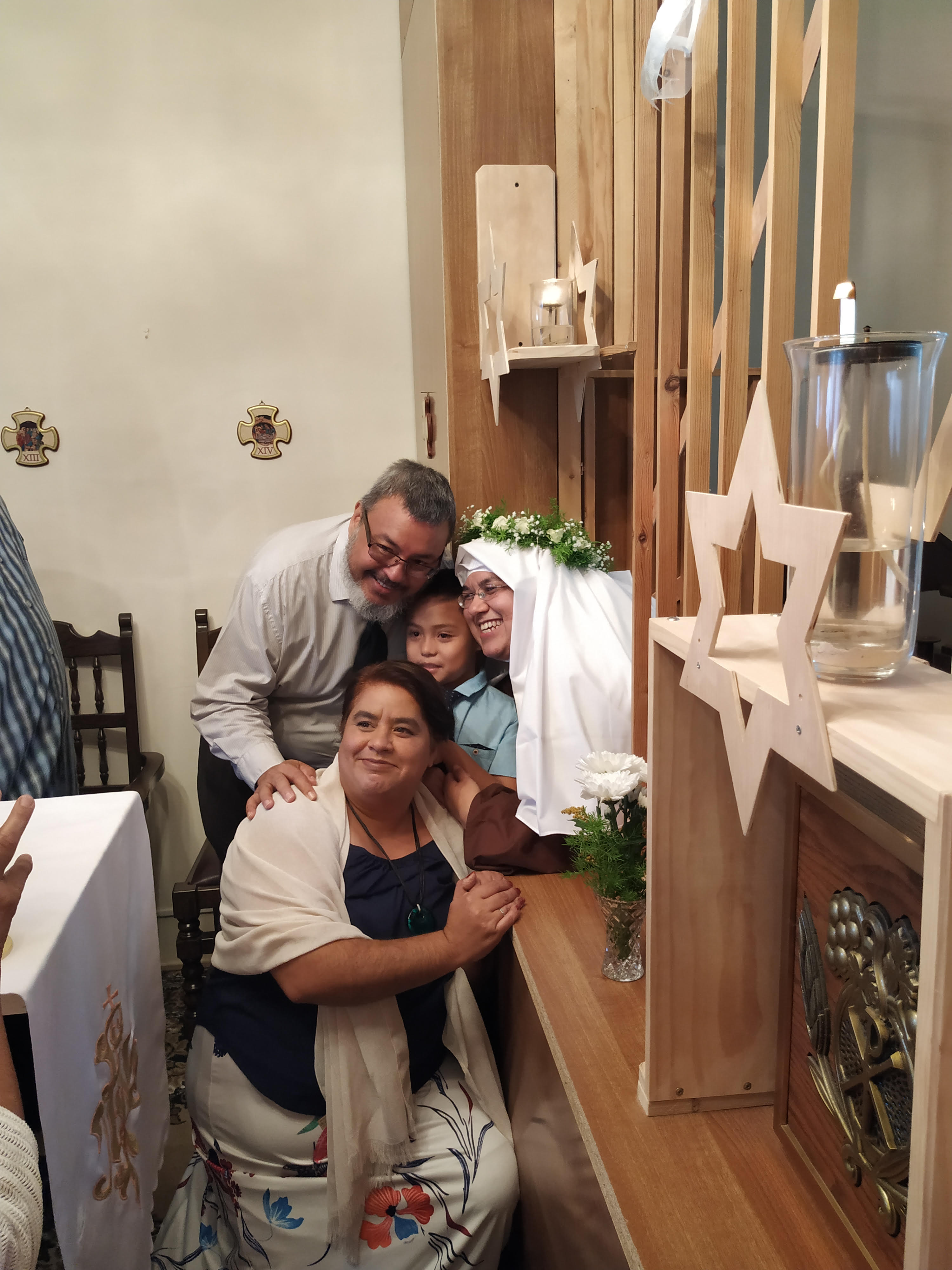
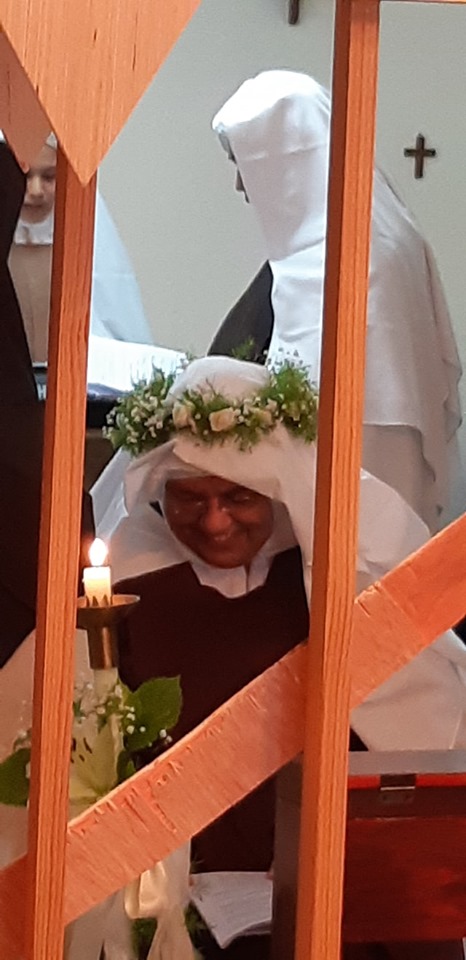
On September 12th 2019, these holy souls made a step forward. One of them, Sister Mariyam Shahar of the Savior made her simple profession. In front of her prioress and her community she promised that she will live a life of obedience, chastity and poverty in the spirit of Carmel. Her family have travelled all the way from Guam to witness this joyful celebration. 

As she wrote in the handwritten invitation that she prepared, this is a nuptial celebration between the MOST HANDSOME of all men and myself.

She is a very lucky girl… And the Church in Malta is very lucky that someone is giving up her life for the salvation of souls in Malta and worldwide. 

This is the first ever profession of a Carmelite in this new foundation at Tal Virtu’, Rabat Malta.

The Discalced Carmelites have another foundation in Santa Margerita, Cospicua. They are in Malta since 1726!


Sunday, September 8, 2019

The Purpose of the NCW

The Neocatechumenal Way is an itinerary to Christian formation.  In other words, it is a detailed path of conversion by discovering the richness of one's baptism.  Ghandi once said, "I like your Christ, but I don't like your Christians.  Your Christians are so unlike your Christ."  There are many people who call themselves "Christians", but they are "Christians" in NAME only.  However, out of the Catholic Church came many holy saints who were once sinners and who led virtuous lives with God's grace. This is the purpose of the NCW....to become true sons and daughters of God.....to become holy saints. 

The most important thing is to put the teachings of Christ into practice, but this can only be done through the grace of God because with man, it is impossible.  Scripture becomes alive as we live out our faith. As an example, Christ taught us not to judge.  This is a teaching we all know, but how many of us actually put this teaching into practice in our life? Another one of Christ's teaching to love the enemy, but how many of us can do this?  This can only be done with God, and so we consistently pray for God to give us the grace not to judge and to love the enemy.

The Neocatechumenal Way has catechists, and each catechist team has a priest. In fact, even the International Catechists has a priest, Father Mario.The main catechists in Guam are David and Maruxa Atienza and Father Harold.  The catechists are like spiritual directors.  I compare them to the prophets of the Old Testament.  God ALWAYS call people to guide His Church. God called Moses and the prophets to guide the community of the Israelites.  

Luke 16:29-31  “Abraham replied, ‘They have Moses and the Prophets; let them listen to them.’  “ ‘No, father Abraham,’ he said, ‘but if someone from the dead goes to them, they will repent.’ “He said to him, ‘If they do not listen to Moses and the Prophets, they will not be convinced even if someone rises from the dead.’ ” 

In my opinion, the catechists are like the prophets of the Old Testament who were called to guide the community of Israelites. In the New Testament, the Apostles, bishops, and priests were called to lead God's Church. Each catechist team has a priest to ensure that the laypeople in the catechists follow the Church teaching. Although the New Evangelization allows for the laity to evangelize, this does not mean that we do not need the ministering priesthood.  Together with them can we have a fruitful evangelization. 

The propaganda in the jungle says that the NCW members MUST obey their catechists as though they have no free will.  According to the jungle (the bold is mine):
You have to obey your chatechists yes or yes. Always. No exception allowed. Your catechists do obey theirs as well. And their catechists do obey Kiko blindly. Kiko does not obey anybody. Only God because only God is above him. Hierarchy of catholic Church has to obey Kiko. He will never say that openly. He will always say "hierarchy has to obey catechists" or "the international team of catechists", language does not matter. The fact is Kiko is over them. He is the lay Pope.
Notice what I placed in bold above.  If Kiko never said that openly, then where did they get the idea that the hierarchy of the Catholic Church has to obey Kiko?  

In an interview, Kiko Arguella stated: "It's (Neocatechumenal Way) an instrument at the service of bishops and parish priests to bring back to the faith the great many who have abandoned it".

Kiko never stated that it was an instrument at the service of the catechists.  Only those who opposed the NCW spread this propaganda.The laity in the Way never made any vow of obedience.  They have the free will to listen to the catechists or to follow their own will. 

As an example, if a couple walking in the Way is living together outside the boundary of marriage, the catechists will advise the couple to either get married or live separately.  The choice is theirs to make. Of course, some have left the Way because they did not like the advice of the catechists and would even say that the catechists are trying to control their lives.  However, any Catholic priest will give them the same advice.  A couple cohabitating together is not following the teachings of the Catholic Church.

Many people today view cohabitation as normal and acceptable rather than sinful.  The purpose of the NCW is to make aware of one's own sins.  After all, that was the reason Moses came down the mountain with the Ten Commandments.  After taking them into the desert, God gave the community of Israelites the Ten Commandments so they can be aware of their sins.  When one becomes enlightened of their sins, one then makes a choice to either remain in the darkness of their sins or live a chaste life.  

The Way is an itinerary of Christian formation because we are not simply taught to know Christ's teachings, but to put those teachings into practice.  Those teachings can be put into practice when one is in a community with brothers and sisters with many different personalities and characters.  Naturally, there will be clashes or conflicts within the community due to the many different personalities and characters.  Even among the Apostles, there were also disagreements and indignation.  According to the Holy Bible: 

Matthew 20:21-24  “What is it you want?” he asked. She said, “Grant that one of these two sons of mine may sit at your right and the other at your left in your kingdom.”.......When the ten heard about this, they were indignant with the two brothers. 

Galatians 2:11  But when Peter came to Antioch, I had to oppose him to his face, for what he did was very wrong.

Imagine that!  Peter was the leader of the Apostles, and Paul stood up and opposed him because he felt that Peter was wrong, and Paul sought to correct Peter.  Eventually, the Apostle Paul later understood that he was the one in the wrong. Thus, even the apostles had conflicts in their own community.  However, the Apostles reconciled, forgave each other and did not hold a grudge....a mark of true Christians. In short, they put into practice the teachings of Christ in their walk.  However, it was never through their own effort.  It was through the Holy Spirit that they were able to accomplish this.  

 It is through the Holy Spirit that we ask for forgiveness when we have done wrong.  It is through the Holy Spirit that we forgive those who hurt us even when they did not apologize to us.  If it were up to man, man would wait for an apology whereas a Christian would forgive and not hold a grudge.  It is through the Holy Spirit that we do not judge, thinking we know better. It is through the Holy Spirit that we go out knocking door to door, rather than give in to our fear of rejection.  It is through the Holy Spirit that we humble ourselves.  A person with pride cannot humble himself/herself because he/she thinks they know better.

Despite the controversies, the NCW has produced fruits. Jesus said that it is by their fruits that one will know His disciples. His disciples come to serve, not to be served. The NCW has shown it's service to the parish through their voluntary work and participation in the parish activities, in helping the poor, and in promoting priestly vocations. It has shown it's service to the universal Church through the New Evangelization and in promoting religious and priestly vocations.