Tuesday, March 31, 2020

Unity Amid A Crisis

Sadly, the COVID-19 virus has claimed a second person on Guam.  The first person was a 68 year old woman.  Today, a 79 year old man passed away at GMH (See story here).  

The United States also leads the world in having the most confirmed cases of corona virus, surpassing China and Italy.  They also have the most deaths recorded.  The United States currently has 164,359 of confirmed cases of COVID-19 and 3,173 deaths.  The state of New York has the most confirmed cases and the most deaths.  The health care system in the U.S. are reaching their capacity.  They are getting bombarded with so many patients, that some of these patients will be unable to receive proper care due to its health system being overwhelmed.    

People we need to come together united as one and do our part in ceasing the spread of this disease.  There are many information on the Internet on how to battle the corona viruses.  First and foremost, stay home.  Practice good hygiene and do not touch your face.  Many of us are used to touching our face.  Times are now different.  This is a time, we need to learn not to touch our face.  Take care of yourselves and others so we can get through this crisis.  We get through this crisis only if we stand together united.  

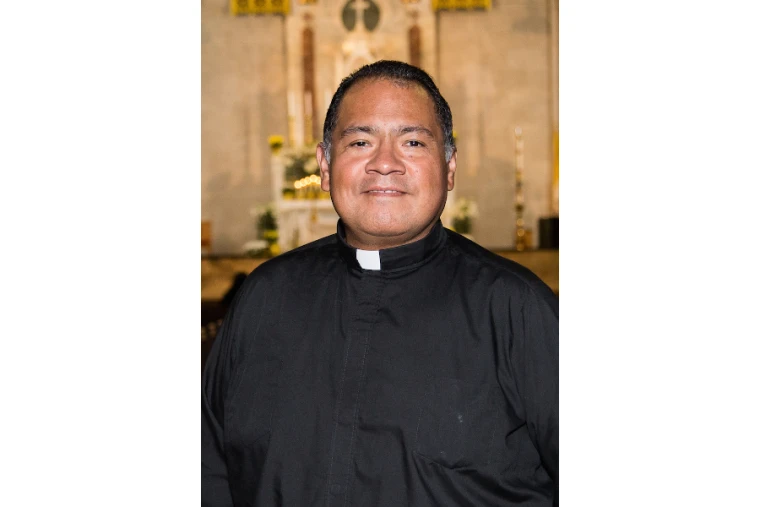
Furthermore, Father Alberto sent a message to the communities regarding Palm Sunday.  On April 5th, Palm Sunday, put a branch on the door of your house or on the window to celebrate Palm Sunday.  It could be any green branch.  Despite that we are physically isolated, we are not separated.  Remember always that we are united as the Body of Christ.  We can express this unity as we celebrate Palm Sunday despite our social isolation.  Thank you, Father Alberto for such a wonderful idea. 

The following video is a tribute to all the doctors, nurses, scientists, health care officials and all those on the front lines helping people stricken with the corona virus.  We can do our part in helping those on the front lines by staying home.  God bless you all!    


Sunday, March 29, 2020

Rest In Peace Father Jorge Ortiz-Garay

Father Jorge Ortiz-Garay became a priest through the Neocatechumenal Way.  He was also the pastor in the Diocese of Brooklyn.  On March 24th, he was quarantined because he contracted the corona virus.  Sadly, on March 27th, he passed away.  He was the first priest who died in the United States as a result of COVID-19.  For those who knew him, he was described as a "good man with lots of zeal for evangelization, a true Pastor bringing the love of God to all. May he rest in peace for his good works precede him."  According to Catholic News Agency:


Fr. Jorge Ortiz-Garay. Courtesy photo.
A Brooklyn parish announced the death of its pastor, Fr. Jorge Ortiz-Garay, who died of coronavirus at approximately 6 p.m Friday evening. The priest is the first in the U.S. known to have died from the virus.
Journalist Rocco Palmo was the first to report that the priest died from the virus, which is the cause of a global pandemic.
On March 24, the Diocese of Brooklyn announced that a priest at St. Brigid’s Parish in Brooklyn, where Ortiz was pastor, had contracted the coronavirus. On the same day, the parish posted on its Facebook page that Ortiz was “under observation in the hospital” and requested prayers “for his speedy recovery.”
On March 27, the parish posted on its Facebook page again:
“With a very sad heart, we inform you of the death of our dearest pastor, Father Jorge Ortiz Garay. We ask for your prayers for his eternal rest. We also ask you in a special way to pray for his parents, siblings, nieces and nephews who have lost a very special and loved person by his family, our community and many people around the country.”
Ortiz was born in Mexico City, and, according to his parish website, “At age 18, he joined the communities of the Neocatechumenal Way. It was through the involvement with this group that he felt his calling for the priesthood.”
He was ordained a priest in 2004 in Newark, and served parishes, along with missions of the Neocatechumenal Way, in New Jersey and New York City. He became pastor at St. Brigid's in 2019.
In addition to his parish and missionary work, Ortiz led Hispanic ministry initiatives in the Diocese of Brooklyn. He is remembered by friends as a fervent evangelist.
The first cleric in the U.S. known to have died of the virus was Deacon John-Sebastian Laird-Hammond, OFM, who died March 20. Worldwide, more than 60 priests and at least one bishop have died of the virus.
More than 100,000 people have tested positive for coronavirus in the US, and more than 1,700 have died. In the state of New York, which has become the epicenter of the pandemic of the virus in the US, more than 600 people have died. 

Thursday, March 19, 2020

Stand Together As One

These are trying times as Guam battles the COVID-19 virus.  Thus far, there have been 12 people who have tested positive for COVID-19.  Doctors have come out trying to persuade the public to stay home.  However, as I stand outside my porch, I see many cars passing by my home.  There are also many people shopping in the stores.  People, we need to stand together as one.  We need to help each other because we all face the same enemy.....the COVID-19 virus, which has proven to be more deadly to our elderly and those with a weaker immune system.  

When shopping, one member of the family can go to the store.  It is not necessary to bring your spouse and entire family with you. With that said, do not live in fear by stocking up on hand sanitizers, hand soaps and cleaners.  No need to fear, so share by purchasing only what you need.  Remember the elderly and health care professionals who also need those things. But if possible, stay home and do not travel.  And most of all, pray. Pray together with your family. Our God is more powerful and larger than any virus.  We pray for all those who have contracted the virus, for the grieving families whose loved ones were taken by the virus, and for all people in every nation to stand together as one in doing our part in eliminating the virus that has wreck havoc on human lives.  

If there is anything positive that has come out of this virus, it has forced people to observe better hygiene, and it has also come to benefit the planet (see news report here).  It has also made us see some of the things we have taken for granted.  Both China and South Korea are returning to normal lives as the virus in their country declines.  So, stand together as one.  We all come together as God's children.  I believe the song below is appropriate at this time.   


Tuesday, March 17, 2020

Denver's New Deacons

There were six new transitional deacons in Denver.  One of them is Deacon John Almeida from the Neocatechumenal Way.  On this blog, I will only post about Deacon John Almeida's story.  However, you can read about the other five deacons including Almeida here.
---------------------------------------------------------------------------------

Deacon John Almeida

Deacon John Almeida was raised in the rural town of Heath in western Massachusetts. The fourth of eight children, he remembers faith being a central part of his family and his upbringing. His father taught him the value of hard work, praying and the importance of Sunday Mass.
At the age of 12, Deacon Almeida’s mother died in an automobile accident, leaving his father to raise the eight children on his own, whose ages ranged from 17 to one. This put a huge strain on Deacon Alemeida’s father, whose health began to decline, and it also put a strain on his own relationship with the Lord.
“I became very embittered and closed to the Lord and in many ways also to my family members,” Deacon Alemeida sad. “I still went to Mass and prayed at home, but my heart was far from the Lord.  I looked for happiness in having money, success, having friends and being educated, but I wasn’t at peace and couldn’t fill the void in my heart.”
This all changed when he became part of a Neocatechumenal Way community.
“It was through the Neocatechumenal Way community that I discovered my vocation,” Deacon Almeida said. “It was the place that I first ever heard the words that God loved me as a sinner.”
Deacon Almeida is excited to partake in the moments of grace which the Lord uses the priest to facilitate.
“I am really looking forward to being a part of the most precious moments of peoples’ lives, whether that is the baptism of a child, a wedding, or even a funeral, they are all special moments of grace where the love of God for man can be made manifest,” he said.

Big Graduating Class Brings Big Numbers

The COVID-19 virus has finally come to Guam.  We know that it would only be a matter of time.  But as our catechists tell us, do not fear.  God is in control.  This virus comes during Lent.  Due to the virus, we can no longer hold our meetings and celebrations.  All weekday and Sunday Masses in the parishes are also suspended.  Nevertheless, we can still pray in our homes.  Every brother and sister are asked to pray in their homes with their own family.  Fear not for God is in control.  

While we contend with this virus, not all is lost.  Life continues on as the NCW continues to bear fruit.  The following story can be found here.
----------------------------------------------------------------------------------


The Serra Club’s 2020 Ordinandi Dinner on March 3 was the biggest ever, celebrating the biggest St. Augustine’s Seminary graduating class in recent memory.
The 13 men to be ordained this spring, including seven for the Archdiocese of Toronto, drew a crowd of 1,839 to the Pearson Convention Centre in Brampton. The record attendance raised $35,000 in support of the seminary.
The biggest number of all was 2,642,239. That was the size of the spiritual bouquet of Mass intentions, rosaries and prayers the Catholic Women’s League presented to this year’s crop of future diocesan priests. Toronto Archdiocesan CWL Council president Hilarion Mitchell headed up a delegation of 210 CWL members attending the annual dinner. There were also 105 Knights of Columbus on hand.
“This is a joyful occasion,” said Cardinal Thomas Collins. “It is a time to reflect upon the call of God and, today in a particular way, we think of those who are called to serve us in the holy priesthood.”
The 2020 St. Augustine’s graduating class  includes two missionaries of the Neocatechumenal Way, whose studies at St. Augustine’s Seminary are supplemented by formation at the Redemptoris Mater Seminary. Both the Neocatechumenal Way missionaries, AndrĂ© Luis de Lima, 32, from Brazil, and Rafal Michal Bartosinski, 34, from Poland, will be ordained for service in the Archdiocese of Toronto.
Five other men who have been studying at St. Augustine’s are also being ordained for Canada’s largest archdiocese: Michael Nabor Corpus, 43; Martin Diciuangco, 31; Joshua Lobo, 29; Neil Pereira, 30; and John Steven Sutka, 42. The Diocese of Hamilton nets two new priests in Hayden Starczala, 28, and Pawel Stankiewicz, 29. Ottawa adds Jonathan Kelly, 30, while Pembroke gains Michael Coyne, 46.
Martin Santos Lugo Tapia, 31, will return to Memphis for his ordination. Jakub Mackowicz, 32, will be ordained for the Diocese of Orange in California.
The men celebrated at the Ordinandi Dinner got to choose the theme for the night. They chose “Jesus, I trust in you.”
In 13 short talks, each of the deacons demonstrated how putting their trust in Jesus led them to ordination.
Pereira said he was amazed to find he was still called to serve, “despite my sinfulness, despite my unworthiness, despite my attraction to the world.”
A walking pilgrimage to the Martyrs’ Shrine in Midland, Ont., was the turning point in Dicuangco’s journey to the priesthood.
“On this pilgrimage, I really had an encounter with God,” he said. Instead of faith as an abstract notion, “Faith was now someone — a person who loved me and gave Himself up for me,” Dicuangco said.
Neocatechumenal missionary de Lima spoke frankly about his struggles in seminary — struggles that lasted 12 years.
“You’ve heard of permanent deacons. I thought I would be the first permanent seminarian,” de Lima said. “It was not 12 years of slavery.”
The spur to Sutka’s quest was a pair of Jehovah’s Witness missionaries who tried to talk him and his brother out of Catholicism.
“Because of them, I wanted to learn more about my faith and how to defend it,” Sutka said.
“No one’s call story is a single effort,” Coyne said.
Coyne, 46,  relied on his mother, his sister and the example of his fellow seminarians as he took the long way round to priesthood through teaching English abroad, a stint as a long-haul trucker and the experience of Christian community at Madonna House in Combermere, Ont.
“I thought the Church is good for old ladies. The Church was very boring to me,” was Bartosinski’s starting point.
Deeply affected by St. Pope John Paul II’s funeral, Bartosinski found his way to the Neocatechumenal community.
Stankiewicz praised his mother as he told his story. “Moms are the coolest people on Earth. Women have this warmth, this tenderness,” he said. “A mother reflects the tenderness of God.”
Former CN Tower finance officer Corpus emphasized how his shift to priesthood is also a shift in perspective.
“I have a new metric, a new measure of success,” he said.

Wednesday, March 11, 2020

Archbishop Michael Request for Prayers


In his letter published in the Umatuna dated March 8, 2020, Archbishop Michael Byrnes told the faithful to remain steadfast in their faith and request for prayers.  According to Archbishop Michael (the bold and underlined is mine):
Unfortunately, I must disclose at this time that proceeds from the sale of assets are now depleted and the further liquidation of assets, the source we identified for funding the legal costs, is currently blocked by the bankruptcy process. 
Since mid-January, the Archdiocese has been forced to begin using general operating funds to cover legal fees, not just for its legal representation but as the debtor, for that of the unsecured creditors' committee.  This committee is comprised of representatives of those with claims against the Archdiocese and their legal team costs are significant.  Each day that passes without agreement about the way forward, and each dollar that goes away from the Archdiocese greatly affect our ability to reach the best possible resolution with the victims of clergy abuse.  
 Our attorneys continue to communicate with the legal counsel of the claimants.  Both sides are devoting much time and work in the process.  However, we pray - and we ask prayers from everyone - for a more expedient resolution to the entire process.  We especially pray that legal counsel of both sides would be able to reach agreements that ultimately would provide for healing, justice and compensation for the victims and survivors with much timeliness.  
Once more, I reiterate that with each day that passes, resources of our Archdiocese are being diminished. Our schools, parishes and other ministries would enter greater peril of discontinuing or closing if settlement negotiations span a prolonged period of time. Most importantly, with the depletion of our funds, the amount of compensation for the victims of clergy abuse also faces tremendous reduction. 
It has been over a year since the Archdiocese of Agana had filed for bankruptcy, thinking it would be more cost effective than going through a long legal battle in court.  With the way things are going now; perhaps, it probably would have been more cost effective to go through a legal battle.  Why is it taking so long to reach resolution?  For one, the alleged victims are not satisfied with the money they are getting.  According to the Guam Daily Post, the Archdiocese is pushing for a global settlement, but many of the alleged victims opposed it.  According to Pacific News Center, Attorney David Lujan stated in his interview:
"Well right now we don't know so of course we'll play it according to the harm that each claimant or plaintiff suffered," answered Lujan. 
Although a cash payout can seem enticing, Lujan says not all his clients may agree to it.   
“It’s not going to be a one-time settlement, it’s going to be an individual settlement. So as each case is evaluated and let’s say it’s settled, some I expect will settle and some I expect will not settle because perhaps the offer that is being given is too low. It depends on the particular plaintiff,” said Lujan. 
So, it appears that mediation is taking more time because some of the alleged victims feel that they deserve more money than other alleged victims. And as each day passes without any settled agreement, the resources of the Archdiocese are being diminished.  In time, our Catholic schools, parishes and other ministries would be shut down.  If mediation was going to take a very long time, perhaps the Archdiocese should have taken it to court rather than settle out of court.  That is only my opinion. 

Furthermore, the number of sexual allegations continue to rise even after the August 15, 2019 deadline.  The latest one was just filed yesterday (see the story here).  As more and more sexual allegation lawsuits continue to rise against the Archdiocese, the compensation for these alleged victims are being greatly reduced, which would lead to more dissatisfaction among the alleged victims and a lengthy mediation process.  The only winners in this case would be the lawyers.    

Saturday, February 29, 2020

A Teacher's Worst Nightmare

Many lawyers across the nation are proposing legislation in their states to eliminate the statutes of limitations for rape and child sexual abuse.  When money from the Catholic Church runs dry, their next target will be teachers.  If legislation is passed, many will come out accusing teachers of sexually abusing them decades ago.  Many of these teachers will probably be deceased, and the government institution will be named in the lawsuit.  Like the Church who relies on their parishioners for its income, the government relies on its tax-paying citizens.  Would the government raise the taxes in order to settle the lawsuits if it comes to that?  The following article was published by Michael Gallagher in These Stone Walls. 

------------------------------------------------------------------------------------


Michael Gallagher, a U.S. Army veteran and dedicated teacher, recounts the most harrowing battlefield of his life, but it was not in Korea. It was in Pennsylvania.

Introduction by Father Gordon MacRae
Michael and Betty Gallagher are longtime readers of These Stone Walls from Abington, Pennsylvania, where they are active members of Our Lady Help of Christians Parish in the Archdiocese of Philadelphia. Mike and Betty are sometimes quick to praise me for my “faith and endurance” but after hearing Mike’s story, I bow to them for theirs.
Michael, now 82 years of age, served in the United States Army in Korea for two years. After active duty, he and Betty raised their three sons while Mike worked full time for Sears. While working and raising a young family, Mike attended night school at LaSalle College and Temple University from where he earned academic degrees and teaching certificates.
Mike had a distinguished career as an inner city elementary school teacher in Philadelphia for six years followed by 26 years teaching in the Abington, PA School District. Then, one day, the police showed up at his home, an event that set in motion the title Michael Gallagher gives to this haunting and riveting post. I will never forget this harrowing account that feels so painfully familiar to me.
A TEACHER’S WORST NIGHTMARE by Michael Gallagher
“I look upon those squirrels as they scurry up our tree.
If only I were them, how free that I would be.
And now they go without me, the birds upon their wing.
If only would my mind be silent; the peace that it would bring.”
Saturday used to be the best day of the week. I would take a short walk around my neighborhood on Saturday mornings and pass the Abington Township building where the jail is housed. I recall thinking, “I wonder where the jail is in that place; it would be interesting to see it.” There is an old saying that I also recall: “Don’t wish for something. You might get it.” On January 22, 1998, that wish came true, but not the way I wanted.
A little over month earlier, on December 12, two detectives from the Abington Township Police Department came to my door and asked if I was Michael Gallagher. They stated that a complaint had been filed against me and I would have to come with them to the station to learn about it. I asked if I needed an attorney, but they lied and said, “No.” I trusted that answer, and with that mistake my life changed forever.
My wife, Betty, and I went with the detectives. I was told, once there, that a student I had taught twelve years earlier in my fifth grade class had accused me of molesting her numerous times in 1986. Who, I wanted to know, would make such a ludicrous accusation? When I was told the name of this young lady, I could hardly even remember her. All I could recall was that she had been a quiet young student.
In my 32 years as a teacher, 26 of them in the Abington Township, Pennsylvania School District, no one had ever before even hinted of anything improper. Now this former student had accused me of raping her at least twenty times a dozen years earlier. Some were claimed to have taken place in my car, some in an unidentified apartment she said I owned in our county. But most of the claims were in my classroom, a classroom of mostly all windows that looked out onto the school playground and the inside corridor.
Trying to prove my innocence, I answered all of their questions honestly and to the best of my ability. This was, after all, twelve years ago! My wife and I even allowed the detectives to search our home, a process that took two hours wherein they found nothing even related to these charges.
I later learned that they were really looking for pedophilia related evidence. Having found nothing, these same detectives, along with the prosecutor, would make up a story that I probably had a storage locker somewhere with pictures of my accuser and other child pornography. Of course, they never even attempted to investigate this to corroborate or refute the untrue presumption.
Finally, they asked if I would be willing to undergo a polygraph examination. I readily agreed which was another mistake. The operator was just another detective from the police station who kept telling me that if I would confess to these crimes, “we can stop this procedure right now!” All that polygraph operator was doing was using the device to further question and entrap me.
I had spent an entire day with the police, cooperating with them, professing and even proving my innocence, all without an attorney. I trusted when I should not have trusted. I spoke when I should not have spoken. The polygraph operator lied, telling the District Attorney that I failed the polygraph test. My own attorney, retained later, learned that I had passed conclusively.
UNDER THE HARSH GLARE OF JUDGMENT
One month later, the police were at my door again, this time to arrest me. I was placed in handcuffs, led from my home in humiliation, placed into a cell for three hours, and then was taken to the district court where I was paraded before news cameras from the five Philadelphia TV stations. The press were also alerted to be present to witness my public condemnation.
Only my wife and one of my Sons were there in court to lend some support. A teachers’ union lawyer had vanished leaving me to face the judge and prosecutor alone. The judge set a preliminary hearing date and then released me, but first I had to post our home as bail. That very evening, on the local television news, I learned that the Abington Township School District had suspended me without pay after 26 years in my teaching position.
The next day I received a certified letter informing me of the suspension. In my early sixties and nearing retirement age, I wondered how my family could survive without income. I still had one son in high school, one in college, and one married living 100 miles away. It was torturous to think of how all this affected my family.
I finally hired a new attorney. He had been an assistant district attorney in the county, and he “knew the ropes.” He also had a daughter whom I had taught in a previous school. He knew me and he knew the system. I sensed that he had confidence in his ability to represent me.
A week later, all the same media people were present to cover my preliminary hearing, but at least this time I had competent legal counsel before facing my accuser in court. She told a surreal and astonishing account of how I molested her… in my car, in some unidentified apartment, and in my glass-enclosed classroom.
Here I was, a teacher with an outstanding record of over thirty years, a devout and faithful Catholic and family man with a wonderful wife with whom I had raised three great sons. Did they just not bother to investigate my character? Sadly, they did not, so anxious were they for a conviction. The police hoped that my picture being shown all over the media would do their work for them by generating other accusers. As time went by, no one else accused me.
But that did not stop this runaway train. Unbelievably, the judge bound me over for trial even after my attorney cross-examined the accuser in the preliminary hearing. He found that she was not able to produce a single witness or a shred of corroborating evidence to support her claims.
This is when I learned that in cases like mine – and like that of Father Gordon MacRae whose trial preceded my ordeal by four years – the accusation itself is all the evidence that is needed to convict the accused. In the words of a prosecutor, “The only people who know the truth are the accused and “the victim.” “If you believe the victim, that is enough to convict!” From day one, my accuser was called “the victim.”
IN THE EYE OF THE STORM, SOME GOOD SAMARITANS
After that preliminary hearing, nothing really happened. Winter turned into spring and then summer with all this all looming over our heads. I spent each day alone with my wife, knowing that the road ahead was fraught with danger. On one bright June day, a certified letter arrived announcing a Summary Judgment from the Pennsylvania Department of Education.
The letter announced proceedings underway to revoke my teacher certification. It said that an indictment or an arrest was as good as a conviction. I had not even had a trial and this bureaucracy had already judged me guilty. I had worked so long and so hard, going to night school while teaching, to earn this precious certificate.
That same month was time for my annual retreat. When the notice came I told my wife I did not want to go because I was so depressed. She urged me to attend, and reluctantly I agreed. During that retreat, as I came out of my assigned time for Eucharistic Adoration, I felt the urge to write down a message I thought the Lord was telling me.
It was wonderful news, and when I arrived home the next day, I shared that message with my wife. We both had strong faith, and were elated by the hope the message brought. I filed that message away since nothing was happening. Eventually, we both forgot about that message.
The strange thing was, though, that as I continued down that road I could “feel” the prayers of all those relatives, friends, and fellow teachers who said they would support me. Never since then have I had such a feeling, but it sustained me. It was palpable and all-encompassing as I lived in that horrible web of deceit and false accusation fully knowing what was ahead for me.
Each and every day during those ten months before trial, there were phone calls, from friends, relatives and fellow teachers. My local teacher’s union president collected money from our Abington teachers and state and national teacher conventions where she spoke about false accusations. There was also financial support from my three sisters and their families.
A man who helped me in the classroom as a volunteer aid gave me $10,000. When I went to write him an IOU, he said, “Mike, this is not a loan.” To this day, I am deeply grateful for what Mr. Rubinsohn and his wife did for us.
At the same time, my church and pastor were deeply disappointing. My pastor promised to support me when he first heard of my arrest, but when my attorney asked him to be a character witness for us, he unbelievably demurred without explanation.
He knew me well as I was not only a faithful usher at Sunday Masses, but also a daily communicant and a religious education teacher for our parish. Why he lied about supporting me, I will never know. As in the case of Father Gordon MacRae, my church just let me hang.
AFTER THE STORM, HEALING FROM THE WRECKAGE
As my trial loomed over those ten months, I reached my lowest ebb by October, 1998. On the 21st of that month, my attorney, Robert Adshead, showed up at my house unannounced. He told me to get my calendar. I thought we were going to write down court dates for the trial. He just quietly told me to write down a date for my victory party. All charges had been withdrawn. I could not believe what I was hearing. After ten long, stress-filled months, it was over!
My attorney had successfully convinced the District Attorney of his doubts about this case. Every time he saw her in the Montgomery County Courthouse, he would remind her of those doubts and the “bombshell evidence” he had amassed. The D.A. became concerned so she called for a polygraph examination of my accuser. She was brought up from her college campus in Massachusetts and a polygraph test was administered.
She failed it so badly that, as one police detective described it, “It almost blew the machine apart!” Once the case fell so totally apart, the District Attorney held a press conference. I was once again the subject of media coverage among the local papers and news stations of the Delaware County area. Only this time the subject was my exoneration. In December of that year, Dateline NBC broadcast this story on their nightly show.
The Abington School District restored my lost pay for the ten months of my suspension. They invited me to have my teaching credentials restored as well, but I did not accept. I accepted retirement instead. I loved teaching, but my teaching career was ruined. It was ruined not only by an unbalanced accuser, but by police and prosecutors who rushed to judgment with no interest in a fair investigation. This seems so typical of today’s criminal justice system.
Remember the polygraph test I took? The detective administering it told me and the D.A. that I had failed it. My attorney discovered that I had in fact passed it conclusively, but after my exoneration the polygraph results mysteriously disappeared from the file.
The Abington Township Police Chief urged the District Attorney to have my false accuser, Margaret Powell, arrested and charged. The D.A. reluctantly assigned an assistant to prepare me for a grand jury investigation. Then the Assistant District Attorney assigned to secure my testimony “called in sick” that day, and I was on my own. I believe she was told not to attend. The fix was in! The presiding D.A. attacked me, undermined my testimony, and blocked the truth from being told.
Besides having to put up our home as security for bail, my legal expenses in this matter amounted to $45,000. I was urged to file a lawsuit against Margaret Powell, but that would have cost an additional $30,000. She ended up facing no consequences at all for her false witness. I never learned what motivated her to concoct these untrue claims.
In November of 1998, a State Legislator from the 153rd District in Pennsylvania introduced House Bill 106 that would make false accusations of serious crimes a felony offense. The legislator tried to get this bill before the General Assembly but was unsuccessful. I testified that this bill would especially protect teachers and others who are vulnerable to false claims.
Among the state representatives present in hearing about the bill was Josh Shapiro who went on to become Pennsylvania Attorney General. After my testimony about my own ordeal, Mr. Shapiro said to me, “No teacher ever better touch my kids!” That was his answer! [Editor: See “Josh Shapiro and Joseph Goebbels in ‘The Reckoning’” linked again at the end of this post.]
When he was up for reelection, Mr. Shapiro told my wife that he would support a bill by Rep. Tom Murt about false accusations. Mr. Murt also wanted a bill to extend statutes of limitations so that Catholic priests and the Church can be sued, but wanted this limited only to claims involving priests. Needless to say, this story left me cynical about the American justice system.
There is one source of light left unfinished in this story, however. It was the message I wrote after Eucharistic Adoration in the heat of this spiritual battle leading up to trial. I had set it aside, coming back to it only after the case was dropped. Here is what the Lord had said to me:
  • “Soon you will be vindicated. There will be no trial. You are not to ask how this will happen but soon it will happen in a most unexpected way. You will not be able to guess how this will happen, no matter how hard you try. And when it happens, you must keep humble and do what you can to help others.”
A Note from Father Gordon MacRae: Mike kept his word to the Lord. Since shortly after These Stone Walls began in 2009, Mike and Betty Gallagher have generously supported my cause for justice with their gifts and prayers. Take my word for it, please, that anyone who has lived such a nightmare instinctively knows the truth of what Mike has written. I thank him for his candor and courage, for keeping his faith alive throughout it all, and for his healthy cynicism without becoming bitter.

Friday, February 21, 2020

Human Trafficking: Thailand to America and a Cold Case in Guam

The following article can be found here.                                                                                              

                                            No alt text provided for this image

In 1991, Thailand ratified the United Nations Convention on the Rights of the Child.  The United States has never ratified it.  The nightmares suffered by this young Thai citizen all took place in America. 

Note: The photo above is a middle school yearbook photo of Pornchai Moontri at the age of 12 taken just days after his arrival in America and just prior to the onset of events described in this article.  The word "Brother" with the two hearts was written on the photo by his brother, Priwan, age 13.

On Saturday evening, March 21, 1992, in a distraught and intoxicated state, 18-year-old Pornchai Moontri walked into a Bangor, Maine supermarket and tried to walk out with a six-pack of beer.  He was chased into the parking lot.  In his drunken state, the homeless teenager had trouble piecing together what came next.  He heard much of it for the first time sitting in court.

As he fled across the Shop 'n Save parking lot that night, 27 year-old Michael Scott McDowell injected himself into the scene.  He saw store employees chasing a young Asian man and assumed it was for shoplifting.  The much larger McDowel tackled Pornchai and wrestled him to the ground.  Pinned down and helpless, Porchai described this moment in "Pornchai's Story" as "Something that lived in me got out."

Pornchai remembers getting up and running, running, running.  Later that night he wandered the streets alone, exhausted and confused.  He lived on those streets, a homeless teenager in a small port city of 31,000 in a foreign country.  He slept under a bridge.  As he fled, hunted, through the streets of Bangor, Maine that night, a car pulled up.  A man he neither knew nor remembers told him to get in. 

There, in that vehicle, he sat in silence until the police came for him.  To this day, he knows nothing of the identity of the man who sheltered him.  Pornchai was charged with assault with a deadly weapon, a knife he carried for protection while living on the streets.  Later reports would show that it took forty minutes for an ambulance to arrive in the Shop 'n Save parking lot.  The next morning, the police told Pornchai that the charge is upgraded to murder.  Michael Scott McDowell had died.

On Thursday, September 30, 1992, journalist Steve Kloehn penned a report for the Bangor Daily News entitled, "McDowell murder closed with a verdict, not a reason."  Its opening paragraph set the stage for the mystery contained therein: "Thomas Goodwin, representing the state of Maine, was trying to explain to a jury the inexplicable: how Pornchai Moontri walked into the Shop 'n Save a teen-ager and came out a murderer."

Until now, I have not been able to write the whole truth of my last fourteen years behind these stone walls.  I have alluded to some of it in cryptic prose, but not everyone caught it.  But many understood that there is an important story coming, a true story of unimaginable pain, power, and consequence.  This is the most important story I have ever written.  It may bring tears.  It should.  But the sun also rises, and with the long awaited dawn comes - if not rejoicing - then at least a modicum of peace.

SOLITARY CONFINEMENT

Pornchai and I first met at the New Hampshire State Prison in 2006.  He has been transferred from a "Supermax" prison in the State of Maine where he served the previous fourteen years - half of them in the utter cruelty of solitary confinement.  He had a short fuse.  He lived with a despair and a rage that walls could not contain.

The system deemed Pornchai to be dangerous unfit for the presence of other human beings.  A day in his life in Maine's "supermax" prison was chronicled by the social justice site, "Solitary Watch" in an article entitled, "Welcome to Supermax".  After fourteen years in and out of that horror - including nearly four years in one long grueling stretch - Pornchai was transferred to another state.  

The transfer from a prison in Maine to one in New Hampshire was administrative and not at Pornchai's request.  His arrival in 2006 took him to a very familiar place: an initial stay in solitary confinement.  After a few months, he was sent to a close custody unit, and finally to a unit in the general prison population where he and I met and became friends in early 2007. 

I remember the first time we met.  I was walking through the prison "chow hall" carrying my tray of food.  As I made my way among the crowded tables looking for a seat, I heard my name. "Hey G, sit here with us."  I spotted my young Indonesian friend, Jeclan Wawarunto sitting next to the meanest looking young Asian man I had ever encountered.  I could instantly see why the other two seats at their tables were still empty.

"Come sit with us," said the ever-smiling Jeclan.  "This is my new friend, Ponch.  He just got here."  As I sat down, I looked into the dark eyes of the young man across from me and saw anger, but it was anger masking something else, a hurt and pain I had not thought possible.  "Ponch wants to ask you a question," said Jeclan.  His friend looked so agitated that I looked quickly away.  "I just want to know if you can help me transfer to a prison in Bangkok, Thailand," said Pornchai with hostility.  

I had, ironically, just finished reading a book - 4000 Days - about the horro of life in a Bangkok prison.  I told the young man that I would not help him do something that would only destroy him.  "Who is this jerk?" he asked Jeclan.  Weeks later, I was surprised to see that same young Asian man dragging a trash bag with his belongings into the housing unit where I lived.  I approached him and said, "I'm glad you're here."  He glared at me as though I were crazy. 

We slowly became friends.  I cannot really explain this long, slow, gradual building of trust with someone for whom trust is a threatening affair.  I today know the courage it took for Pornchai to trust me.  One day, his assigned cell mate came to me and said that he did not know what to do.  He said that Pornchai had not spoken, eaten or even gotten out of bed for days.

I went to see Pornchai.  He was known for having a short fuse, but I told him I would not leave until he got out of that bunk and spoke with me.  I told him that I know what is under how he feels right now.  I asked him to let me try to help him.

Then one day came dreaded news.  A U.S. Immigration Court ruled that Pornchai will be deported to Thailand at the end of his sentence.  He never wanted to leave Thailand.  As a child, Pornchai was forcibly taken from Thailand at age eleven and brought to America, and all he really knew in America was its prisons.  In the meantime, his Mother - his only connection to Thailand - was murdered on the Island of Guam in 2000 in what remains classified there as a cold case unsolved homicide.

Some time later, his cell mate moved.  Prison officials seemed cautious in imposing a new cell mate on Pornchai, so they told him to find someone he wanted to live with.  He asked me and I said yes.  It was early 2007.  Over time, as trust developed, the story of Pornchai's life was drawn out of him - de profundis - from out of the depths.  It is a remarkable account that is now fully corroborated, and it is shocking. 

FROM THAILAND TO TERROR

Pornchai was born on September 10, 1973 near the village of Bua Nong Lamphu in the Northeast of Thailand beyond the city of Khon Kaen.  His biological father was a Thai martial arts fighter who earned a hard-won living traveling from town to town for bouts.  He was sometimes away for long periods.  When Pornchai was two years old, and his brother, Priwan, was four, their mother, Wannee Laporn, left telling them that she was going to the city.  She did not return.  The two boys were abandoned and stranded.

Their father returned weeks later to find Pornchai and Priwan foraging for food in the streets.  Pornchai was hospitalized for severe malnutrition.  When he left the hospital, his father was also gone, leaving them in the custody of another woman.  She eventually put them out into the street where again they had to forage for food and shelter.

Learning of this, the extended family of Pornchai's missing mother sent a 17-year-old uncle to search for the two boys and bring them to their small farm.  Pornchai and Priwan grew up there raising rice, sugar cane, and water buffalo.  They worked hard, but they were happy.  Over time, Pornchai forgot his mother.  He came to believe that his Aunt Mae Sin was his mother.  It was 1975 when Wannee left Pornchai and Priwan at ages two and four.  She was twenty two years old.  She went to Khon Kaen to find work.  The next five years are a blank but at some point she went to Bangkok.  While there she met Richard Alan Bailey, an American military veteran and air traffic controller from Bangor, Maine who was a frequent visitor to Thailand.  Bailey married Wannee in Bangkok on February 14, 1980 and then brought her to the United States.  From reports, Wannee became a recluse in Baileys home.  He tightly controlled her money, her movements, and her communications.  She was allowed to have no friends or support outside his home.  He was reportedly abusive and controlling. 

At some point in their lives, Bailey became aware that Wannee had left two small sons in Thailand.  In 1985, when Pornchai was 11 years old, his mother suddenly reappeared in Thailand to claim her sons.  After a nine year absence, Pornchai had no memory of her and was traumatized to be taken away by a stranger.  He never saw his home and family again.  Wannee took Pornchai and Priwan to Bangkok for several months to await passports and travel documents.  Pornchai turned 12 in Bangkok on September 10, 1985.  Wannee told Pornchai and his brother that in America, they would never be hungry again. 

In early December, 1985, they flew from Bangkok to Boston where Richard Alan Bailey met them.  On the long drive from Boston to Bangor, Pornchai and Priwan had their first meal in America at a McDonalds drive-thru.  Both boys vomited the meal out the back seat windows of the car. 

From the moment of their arrival in Bangor, the tone changed rapidly.  Richard Bailey controlled their money, their speech, and their every move.  The two boys and their mother were forbidden from speaking Thai.  Wannee's English was limited, and neither boy spoke or understood any English at all.

Richard Bailey's sister, who always treated Pornchai and Priwan with kindness, asked them what they wanted for Christmas.  The boys did not know much about Christmas, but they understood from their mother that it involves presents. Pornchai's adjustment had been traumatic.  He asked for a watch and a teddy bear.

From here on, this story may be difficult to read.  That night, 12-year-old Pornchai was awakened from sleep and brought to a basement room by Richard Bailey.  While there, Pornchai was forcibly raped by Bailey, an event that was to be repeated too many times to count.  Pornchai was traumatized and terrified.  He did not understand what was being said, but its meaning was clear.  If he resisted or told, the consequences to his mother would be severe.  To demonstrate this, Bailey beat Wannee in the presence of both boys.  When they tried to stop him, he beat them as well.  They were treated as slaves. 

Bailey then arranged separate bedrooms for the two brothers.  Only much later, while in prison at age eighteen, did Pornchai learned that Bailey also raped his brother Priwan.  In fear for each others' safety in that house, they both kept silent.  They lived in a nightmare from which they saw no escape.

Multiple witnesses who grew up in Bangor have come forward with accounts of the 12-year-old who showed up at their homes traumatized, beaten and bloody.  One man reports that he confronted Richard Bailey who later beat Pornchai again while forbidding him to interact with neighbors.  Others have similar accounts.  A school nurse reported his injuries.  Nothing happened.

The first police intervention came when Pornchai was 13.  He had run away, following railroad tracks out of Bangor.  After a day or two, he was reported missing.  Sheriff's deputies pursued Pornchai through the woods and caught him.  They cold not understand his protests as they handed him back over to Bailey, but they filed a report alluding to their suspicions.  Nothing happened.

LOST IN AMERICA

No alt text provided for this image

By the time Pornchai was 14 in 1987, his brother, Priwan, traumatized and broken, fled Bangor.  Pornchai was alone.  He was assaulted and beaten again and again.  He ran away again and again, and while evading police he lived for months on the streets of Bangor (pictured above). For the second time in his life, he was forced to forage for food and shelter in the streets.  He also amassed a juvenile record for stealing food, for truancy, and for being a chronic runaway. 

At one point, Wannee asked Pornchai why he keeps running away.  Pornchai broke down and told her in Thai what Richard Bailey had been doing to him.  She warned Pornchai never to speak of this again.  She said Bailey would beat her and then send her back to Thailand with no means to support them.

In the summer, Pornchai lived in the woods or under a downtown Bangor bridge where his mother would sometimes bring him food.  She held a job as a hotel maid arranged by Bailey, but he tightly controlled her earnings.  In the winter at age 14, Pornchai would sleep in vacant buildings or at times in the homes of friends whose parents' welcome of him was at times generous but sometimes not.  At 15, he was sentenced to reform school, the Marine Youth Center, and became a ward of the state.   

While there, social worker Nancy Cochrane built some trust with Pornchai. When she learned of the severity of the physical and sexual violence he suffered, she filed a formal report with the Sheriff’s department. Deputies interviewed Richard Bailey, but no one else. Bailey convinced them that he heroically gave Pornchai a home in America and Pornchai made this whole story up. Pornchai did not at this time know that his brother had also been victimized. The deputies dropped the case without questioning Pornchai or his mother or brother or the social worker treating Pornchai. The following is from a Maine Youth Center report dated December 14, 1989:

"Totally destroyed boy's faith in family - mother made aware - did nothing - boy began to habitually run away - boy terrified some type of revenge will be taken out on mother."

The Marine Youth Center staff did not drop the matter so easily.  They brought it to other authorities.  During the investigation, Wannee visited Pornchai at the facility where he was held.  She told him that the police questioned Bailey who then sent her to warn Pornchai to withdraw his claims.  The implication - the truth of which Pornchai had already witnessed - was that Wannee would face Richard Bailey's violence.

Fearing for his mother's safety, Pornchai refused to cooperate further with the investigation.  She was his only contact in both worlds, the nightmare he was living in America and the world and home left behind in Thailand.  He suffered in silence, consuming the injustices visited upon him like a toxin.  For many years, Pornchai believed that his mother chose to protect Bailey over him and Priwan.  But at that moment Pornchai came to see that Wannee was as much a victim of Richard Bailey as he was. The evidence for that belief was still looming on the horizon. 

State officials did not understand what was behind Pornchai's silence.  He was transferred to Goodwill Hinckley School in Maine where he met Joe and Karen Corvino, foster parents who, for a brief period, became insturmental in his life.  He later lost contact with them.  Their tearful reunion with him came twenty years later when they rediscovered him, a story relived in "Loved, Lost, and Found: A Gift for Mothers Day".

Pornchai did well at the Hinckley School.  He excelled in Math and Soccer, and the Corvinos recognized the special child who had come to them.  They considered legal adoption of Pornchai, but were told this would be difficult given that his biological mother still lived in Maine.

One day, at a soccer match with a rival school, a group of players realized that they could not win with Pornchai on the Hinckley team, so they targeted him for harassment.  They pushed him, struck him, checked him, and he endured it all.  Finally they shouted slurs about his mother.  In seconds, all three of the larger boys were on the ground.  Pornchai was expelled fro the game.  The next day, over the strenuous objections of Joe and Karen Cornvino, he was also expelled from the school.  Joe and Karen had no choice but to put the 16-year-old alone on a bus to Bangor.  They were told that a social worker would be at the other end but there was no one.  At 16, Pornchai was again living on the streets.  Sleeping in alleys and doorways, he began to carry a knife for protection.  

Pornchai went in search of his brother, Priwan, and found him living in an Asian community in Lowell, Massachusetts. But because Pornchai was still a minor, authorities required that he return to Maine. He petitioned to be emancipated from being a ward of the state. At 17, Pornchai’s legal emancipation was processed by a reluctant Maine Youth Center staff.

THE FATEFUL DAY AND THE LOSS OF ALL HOPE

At age 18, on March 21, 1992, Pornchai became intoxicated and the tragic offense that began this story took place.  It was the last day Pornchai knew freedom, but in reality, his freedom had been taken from him six-and-a-half years earlier at age 12.  This is the context, the "why" that journalist Steve Kloehn asked in the Bangor Daily News at the end of Pornchai's trial in 1992.  Once charged, Pornchai was held without bail for months in the Penobscot County Jail while awaiting trial.

He was assigned a public defender.  After a month, Wannee came to visit Porncha once.  Again sent by Richard Bailey, she pleaded with him to protect her by saying nothing of his past life with Richard Bailey.  Convinced his mother was in danger, he again became silent, refusing to allow any defense that included an assessment of his life.  Under duress, he refused to participate in his own defense.  

Pornchai's brother, Priwan, told the public defender of the years of traumatic sexual and physical violence inflicted on Pornchai by Richard Bailey.  But Pornchai refused to discuss this and refused to allow the lawyer to raise it.  He was in fear for his mother's life.  Pornchai was never evaluated, and none of what happened to him became part of the court record.  The judge mistook Pornchai's silence for a defiant lack of remorse.  Citing that he "had many opportunities in America but squandered them," she sentenced 18-year-old Pornchai to 45 years in the Maine State Prison.

After the trial, Richard Bailey sold his Bangor home, took Wannee, and purchased land and a home on the U.S. territorial island of Guam in the Western Pacific.  At age 18, alone and in prison, Pornchai was thousands of miles from his only contact with the outside world. 

Eight years passed before he saw his mother again.  Wannee decided to leave the abusive Richard Bailey.  She filed for divorce in Guam and the divorce was finalized on February 14, 2000.  The court had ordered Richard Bailey to pay her $1000 per month alimony and to divide the sale of their property evenly between them.  Wannee then left Guam and traveled to Thailand.  She intended to use the money from the sale of the Guam property and alimony payments to build a home in Thailand for herself and her sons.  Later in 2000, Wannee traveled to Maine to visit Pornchai in prison.  She told him that she was returning to Guam to finalize the divorce and financial settlements in the Guam courts because Bailey had ignored the settlement orders and had not provided any of the payments.  This was Pornchai's eighth year in prison.  She also told him of her plan to confront Bailey about the terror he inflicted on her and both of her sons.  This was when Pornchai first learned that his brother had also been victimized by Richard Bailey.

To this day, the financial agreements ordered in the divorce decree have never been met.  Somsap, niece of Wannee in Thailand, today reports that Wannee telephoned her in a panic after her return to Guam in 2000.  Richard Bailey could be heard shouting in the background.  Somsap reports that Wannee was crying and said that she is being threatened by Bailey.  She said that if she is found dead, she wanted her niece to demand an investigation.  Somesap issued a statement, but to this day has never been interviewed by Guam authorities. 

Weeks later, Pornchai learned in prison that his mother had died on the Island of Guam.  He could learn a few details.  Bailey's sister went to visit Pornchai in prison at the behest of her brother.  She said that Bailey had told her that Wannee's body was found at the foot of a cliff leaving Pornchai with the impression that she could have fallen or jumped.  Pornchai asked, "Did Rick kill my mother?"  Bailey's sister answered, "I don't know."  She reportedly stopped speaking to Bailey at this time.  

It was only several years later, at the time Richard Bailey was indicted for his sexual abuse of Pornchai that Pornchai saw an autopsy report indicating that his mother had been beaten to death and left on a beach in Guam. The autopsy concluded that she had several broken ribs which lacerated her internal organs consistent with being beaten. She also had a broken wrist consistent with trying to defend herself. The cause of death was listed as "homicide." A Guam police report shows that Richard Bailey reported her missing, then the next day reported finding her body himself. No one has been charged. It remains today a “cold case” unsolved homicide in Guam. New evidence in this case, including the statements of Somsap, have not been investigated or evaluated. During the investigation into Wannee's death Richard Bailey finalized the sale of his property and quickly left Guam. He traveled to Thailand. At age 53, he married a Thai girl 34 years younger than himself. He purchased land and a home in Oregon and brought her there.

Learning of his mother's death was a breaking point for Pornchai. He gave up, and spent the next five years in solitary confinement in Maine’s supermax prison. ( The WGBH-PBS Frontline documentary “Locked Up in America – Solitary Nation” depicts the nightmare of Pornchai’s solitary confinement. The prisoners you see were in solitary with him in adjacent cells.)

Once I learned the entire story, I could not let it go. I began several years ago to make discreet inquiries into Pornchai’s life in both Thailand and Maine. In 2007, shortly after we became friends, a U.S. Immigration judge ordered that Pornchai is to be deported from the United States to Thailand upon completion of his sentence. I assisted him in an appeal based on the severity of his life, the abuse he suffered, and his need for asylum, but to no avail. The appeal was denied and the deportation order was upheld. Pornchai no longer had any connections in Thailand and had no hope for a future anywhere.

I told Pornchai that we will need to build some connections in Thailand. He said that he did not even know where to begin. Pornchai felt overwhelmed, and took refuge in his imagined “Plan B” – his own final self-destruction. I challenged him to trust. A few years later, on Divine Mercy Sunday, 2010, Pornchai became a Catholic in a dramatic conversion. He accepted my challenge to place his future in God’s hands with the guidance of his chosen Patron Saint, Maximilian Kolbe, whose name Pornchai chose as his own.

Then, Felix Carroll and Marian Press published the book, Loved, Lost, Found: 17 Divine Mercy Conversions with a beautiful chapter entitled "Pornchai Moontri".The book made its way to Thailand where it moved many people in Bangkok to become involved in Pornchai’s story. A group called “Divine Mercy Thailand” organized to help bring him home. They have assured him of a home and support system when he returns.

A DAY IN COURT

After being received into the Church in 2010, I convinced Pornchai to seek some treatment in the prison system. He was diagnosed with acute anxiety and severe Post Traumatic Stress Disorder. He is working with a counselor and is prescribed medications for anxiety and to inhibit nightmares which had plagued him since his arrival in America.

The inquiries I had been making produced some amazing results. Clare and Malcolm Farr, a husband/wife team from an intellectual property law firm in Perth, Australia had been reading my blog, These Stone Walls. Entirely pro bono, they immersed themselves in Pornchai’s story with overtures to the government of Thailand and the State of Maine. Clare Farr, one of the attorneys, has been in daily contact with us over the last several years.

Their tireless efforts gained the notice of the Thai Consulate in New York from where officials have since visited Pornchai and involved themselves in his plight. This story also gained the attention of law enforcement in the State of Maine from where an investigation was launched. Detectives from the Bangor Police traveled to Concord, NH to interview Pornchai and also met with his brother, Priwan. An Assistant District Attorney came on the second interview.

In 2017, Richard Alan Bailey was indicted on forty felony counts of gross sexual misconduct for his well documented victimization of Pornchai and his brother. He was arrested at his West Lake, Oregon home and released on $49,000 cash bond. On September 12, 2018, Richard Bailey entered pleas of no contest but was found guilty and stands convicted of all forty felony charges. At this writing, the 2000 Guam case remains an open unsolved homicide despite efforts to have it reviewed.

Richard Alan Bailey’s sentence may bring the biggest gasp of all: forty-four years in prison, but all suspended, and eighteen years of supervised probation. He continues to live in the State of Oregon where he is registered as a convicted sex offender on the public Registry. He has not served a day in prison. To date, no Maine attorney, where all of the abuse took place, would agree to represent Pornchai and Priwan for a civil redress to compensate the extensive damage and harm they incurred. The abuse destroyed their lives, but unlike the Catholic Church saga there is no deep pocket here. He is clearly not "Father" Richard Bailey. He has also continued to withhold from his victims the financial compensation due to them from their late mother's estate from the sale of their shared property in Guam as ordered by the Guam courts.

Covering this story for the Bangor Daily News, reporter Judy Harrison referred to Pornchai as “the now 45-year-old convicted killer.” Fully one third of her brief coverage of this story focused not on Richard Bailey’s crimes, but on Pornchai’s. Judy Harrison and the Bangor Daily News turned a deaf ear to the profoundly troubling serial victimization that Pornchai's and Priwan's Victim Impact Statements describe.

The shallowness of reporters notwithstanding, Pornchai has also learned the ways of Divine Mercy. He learned them from me. In his submitted impact statement, he asked the court for justice but also agreed to mercy for his tormentor, the very person who has haunted his nightmares for all these years. From Pornchai’s Victim Impact Statement presented in court:

“My brother has struggled with gambling and alcohol addictions and my mother is dead. Richard carried out more sexual assaults against me than there are current charges against him. His actions have robbed me of a normal life which I can never reclaim. Fortunately I have since had a lot of counseling and with the guidance of a wonderful Catholic priest I have found faith and a firm belief in God… I asked God to help me to forgive Richard and through my strong faith I have done this… I cannot forget what he has done but I do forgive him. The law must pass a just sentence, but I agree with the terms of this agreement".

Now, Pornchai will face deportation in a matter of months to a land he has not seen since his childhood was disrupted by the evil plans of his abuser. He and his mother and brother were victims of human trafficking and sexual crimes. There is still hope for justice yet to come if the case of Wannee's murder is ever reopened. For my part, the most important mission of my life as a man and as a Catholic priest has been walking with Pornchai Moontri from dusk to dawn in his survival of the darkest night.

The photo below is of Pornchai Maximilian Moontri on the day he was received into the Catholic Faith, Divine Mercy Sunday, 2010.

No alt text provided for this image